
Whole milk now allowed in school lunches as Trump signs bill reversing limits
President Donald Trump signed a bill Wednesday that lets schools serve whole or 2% milk at lunch.
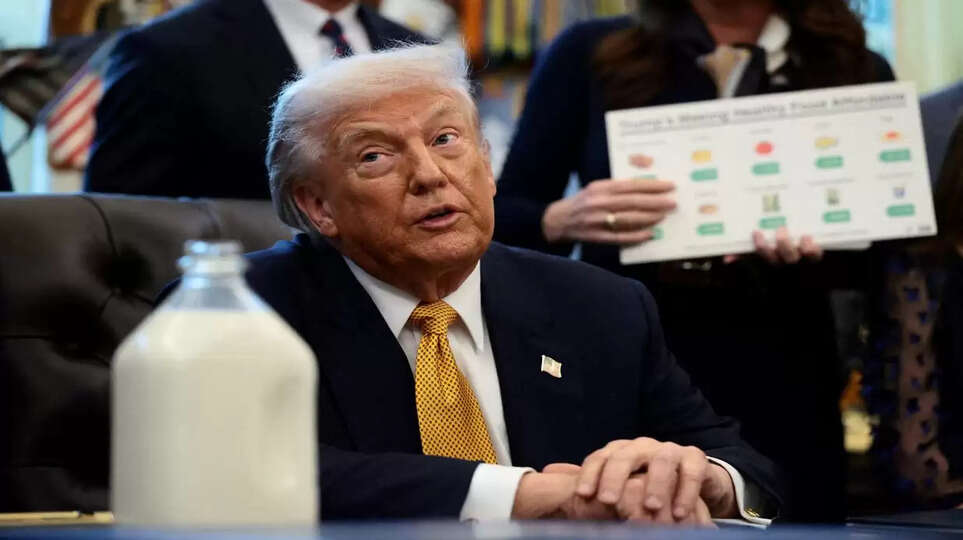
On Wednesday, President Donald Trump signed a bill that allows schools participating in the National School Lunch Program to serve whole and 2% milk alongside fat-free and low-fat versions.
The move comes a week after the US Department of Health and Human Services released new US dietary guidelines that highlight whole-fat dairy products, a recommendation that has received mixed reviews from nutritionists and medical experts.
The new legislation, which passed Congress last year by unanimous consent, rolls back US Department of Agriculture rules approved by the Obama administration that required milk served in schools to be fat-free or low-fat, part of efforts to fight the childhood obesity epidemic.
The new law also allows nondairy beverages that are “nutritionally equivalent” to fluid milk to be offered, such as fortified plant-based milks.
“Removing whole milk did not improve health, it damaged it,” HHS Secretary Robert F. Kennedy Jr. said at the White House signing event, claiming that some students turned to caffeinated and sweetened drinks instead of skim or low-fat milk. “Milk fat is not junk food.”
The USDA has pushed whole milk, posting on X this week an image of Trump wearing a milk mustache and standing in front of a glass of milk, with the words “Drink Whole Milk” at the bottom.
More whole milk was sold in the US in 2024 than other types, with 2% coming in second, according to USDA data. Low-fat and skim milk sales were a distant third and fourth.
Changes won’t happen overnight
The National School Lunch program serves nearly 30 million children, about two-thirds of whom receive free or reduced-price meals.
Whole milk and 2% milk will not appear in schools overnight. There are several steps before it is offered in cafeterias, according to the School Nutrition Association, which represents more than 50,000 school nutrition professionals.
Schools will need to evaluate how much interest there is among students for these options and then discuss availability and price with their suppliers.
Whole milk is more expensive than skim milk, which may prove to be a barrier for some cash-strapped school districts, said Liz Campbell, a registered dietician nutritionist and the association’s vice president for government affairs. Also, the supply of milk options varies widely by region.
What’s more, it’s unclear whether whole milk and 2% milk can be served at breakfast. USDA officials said at an association conference this week that the new legislation addresses only whole milk and 2% milk at lunch, according to Campbell.
The agency has not responded to CNN’s request for clarification. The USDA’s guidance on the law, posted Wednesday, references only expanded options for school lunch programs.
Whole milk and 2% milk should be available in schools soon, Agriculture Secretary Brooke Rollins said at the White House bill signing.
“It should just take a few weeks, and then the milk starts moving in,” she said.